Morning Ritual
Your eyes open. The room is still dark, and only the sound of a fan can be heard. You consider rolling over, but you feel awake, so you get out of bed. The house is still quiet, and the others are still sleeping.
You mosey upstairs and catch the clock out of the corner of your eye and notice you only had a few minutes till the alarm went off anyway. The kitchen still has some dishes from last night, but that’s not your concern at the moment. You take the kettle and fill it with water from the sink. You notice the trash truck coming to collect down the street and the neighbour kids migrating to the bus stop.
Once filled, you take the kettle back to your table and start it to boil while thinking of the tasks you have lined up for the day. While that’s going on, you look at the cupboard and ponder which one of the variety on your shelf you will pick until you inevitably pick the same one you have had for the last several months.
You take your time getting the equipment out. You open the jar and gently sniff the dry material, filling you with a grounded feeling. As you measure it out, you fall into the rhythm almost mindlessly. Same motions as yesterday and the day before that. As the kettle softly begins to bubble, you grab that one mug that fits your hand perfectly and set it down. The kettle has made a soft beep to let you know the water is ready, as the sink from downstairs turns on to let you know wakefulness is stirring in the house.
You pour the water carefully over the mug with your favourite brew inside, savouring the aroma that meets your nose, grounding you further. You now wait as the chemistry inside the cup works automatically, and you ponder what to make for breakfast.
You haven’t noticed it, but your brain is working a little quicker now as you are reminded of an idea for that project you’ve been stuck on. The invitation to lunch with a friend. The upcoming trip you’ve been planning.
Your timer beeps, perhaps a touch too loudly, to let you know your brew is finished. You remove the materials and take your mug and take that tentative first sip, carefully, to not burn your lips like last week. The liquid hits your tongue, and your brain relaxes, as does your body. You enjoy the sip and another as you sit down by the window and watch outside as you sip until you realize slowly that you’ve come to the end of the cup.
You feel ready for the day.
What is a Ritual?
While this example is pulled from my own experience, you will find many other people share in something similar. Morning rituals can follow a number of different mannerisms. Not all even require beverages.
A ritual is simply a repeated set of actions by an individual or group with an intended goal from the set of actions. Generally, most people associate rituals with religious practices, and certainly that’s where a lot of rituals land. In the case of what I am discussing today, it has more to do with grounding oneself with practice in the midst of a busy life.
Slow Down? You’re Crazy!
Maybe. I understand. Kids have soccer. You have that first draft due. Your significant other reminded you that there’s dinner with that new couple. You barely have time to sleep, much less cut out more time for something frivolous like tea prep. How could that possibly help?
Well, there’s plenty of study and anecdotal evidence* that meditation, slow mindful breathing, slow living, etc., are beneficial to your well-being. And I don’t think anyone wants to argue that point. But the rub comes in the actual practice of it, right? Life’s demands and deadlines feel pressing, and so our efforts to do this are hindered; yours truly included.
But! Did the above description seem calming to you? Appealing? And you’ll note there were no special robes, no washing in holy water, or even a special room to do it. It can be as easy or complicated as you want it to be.
Okay, so what does this have to do with Tea?
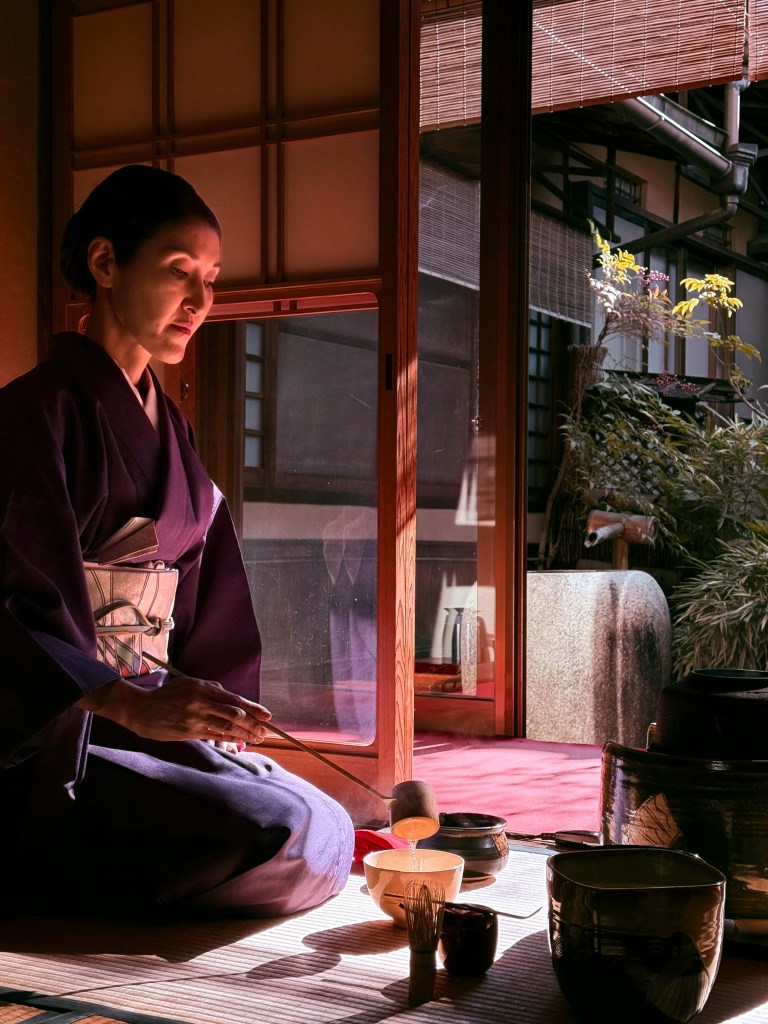
It’s related. Think of the Japanese Tea Ceremony (Chado or Sado). This is probably the most complicated example, but it illustrates my point. The ceremony involves many specific instruments such as bamboo whisks and scoops, cast-iron water heating, certain clothing, and more. It also requires very precise movements and an order of operations on how you prepare the area, make the tea, and serve it. It’s a 1-2 hour ordeal at least, because each action, movement, word, posture, must be done
s l o w l y
If you ever get the chance to go to one, I recommend it as an exercise in slowing down, but what I want to focus on is what happens to you when this kind of discipline is instilled. Right now, I want you to stop what you’re doing, wherever you are and follow me. Read the instructions, then put the screen down, do it and then come back.
Slow Down.
Take a deep breath and exhale. Do it again. One more time. Close your eyes. Let the thoughts you have going on come and go. Don’t think too hard on them.
Now listen to the sounds around you. Don’t think too hard about them, but be aware. How does the area smell?
Just focus your breath for a moment. Do 5 more deep breaths, then slowly open your eyes. How do you feel?
Beauty in Rest
If you’ve ever done meditation before, that wasn’t new, but for some, it will be. It’s a form of rest, and it didn’t take much work at all. Kind of the point of rest. But now let’s take this back to our beverage.
Imagine doing everything you just did while making the tea, coffee, cup of water, or even a baby bottle at 2 am. Imagine the word picture above, but imagine it at 0.5x speed. This is the beauty behind the Japanese Tea ceremony, but even beyond that.
We tend to spend our time worrying, rushing, and gunning for the next “thing”. Our pace of life, especially here in the West, is a very results-driven environment. What can I achieve? How do I get that promotion? How do I get more followers? What can I get involved in now?
s t o p
b r e a t h e
r e p e a t
It does all sorts of good for us to do this. Sometimes it’s just to reset yourself. Sometimes it’s to be present with the people who are drinking with you. Sometimes it’s to appreciate nature. Sometimes it’s time to just appreciate the tea you’re drinking.
Okay, Slow Sure. But What’s the Point?
Okay, so if I haven’t already demonstrated why I think this is important, here’s another story.
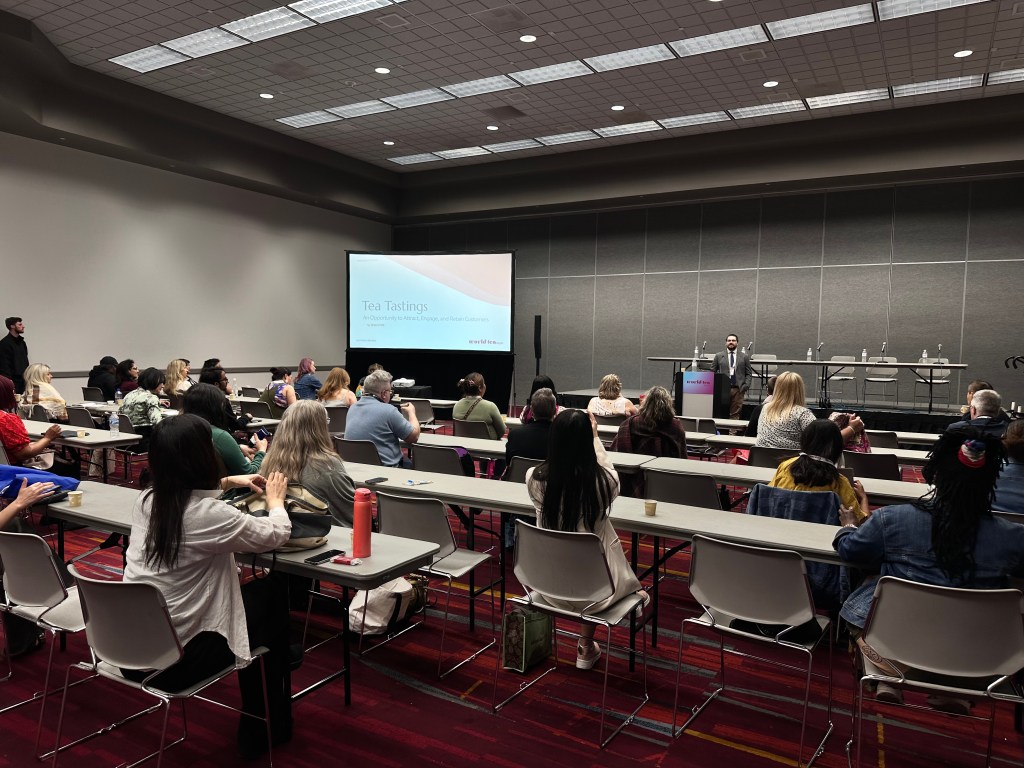
When I worked for The Cultured Cup, we had started doing more Gong Fu Cha demonstrations at the bar for private tastings. A co-worker put us onto a Polish table-maker who was designing Gong Fu Cha tea tables. See the picture here.
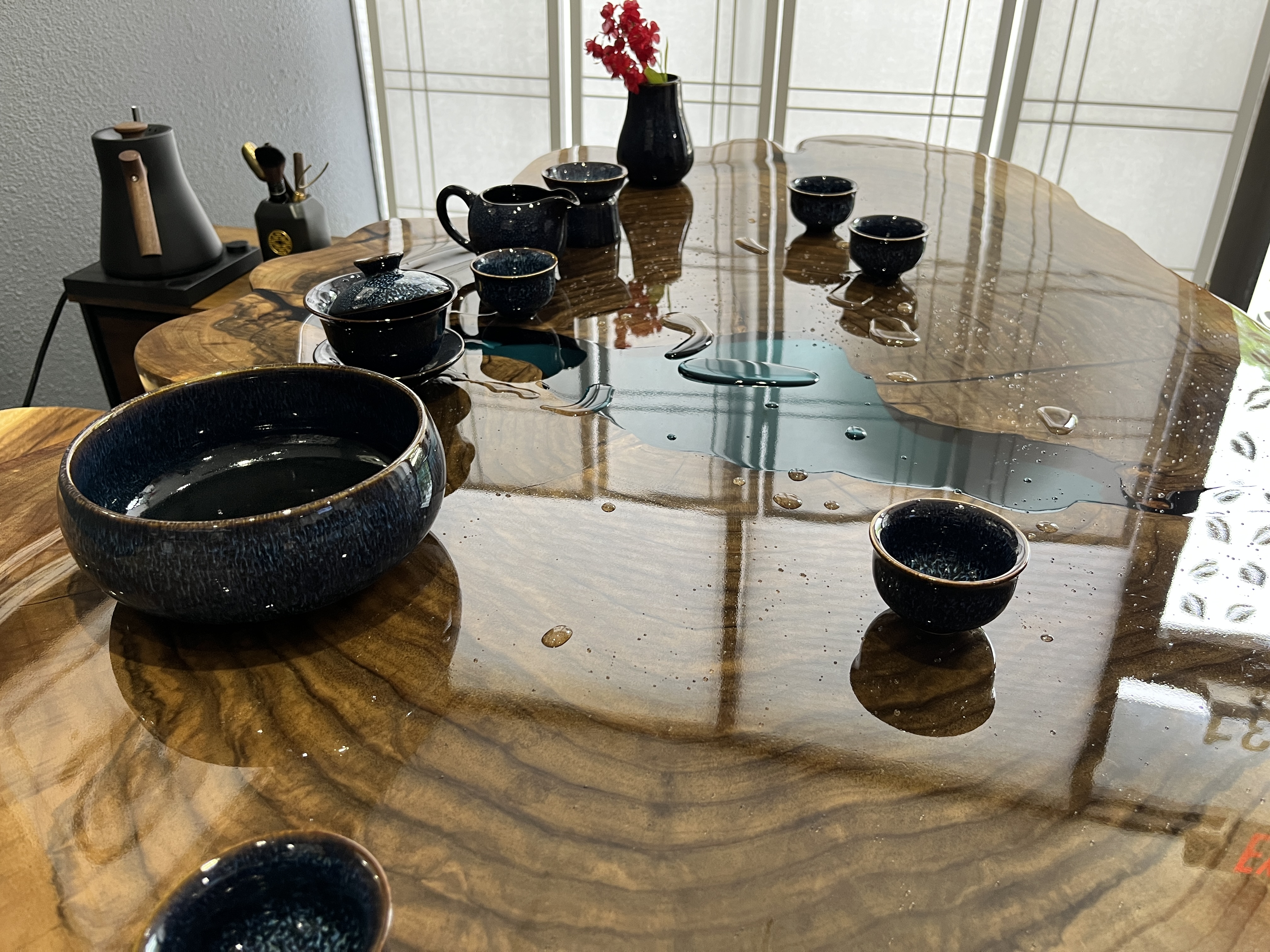
The idea was to start offering a Gong Fu Cha experience to customers, focusing on tea yea, but also the ability to bring people together over a cup of tea. We spent time working out some kinks and flow efficiency, but the experience was wonderful.
The host would start them by explaining a quick version of Gung Fu Cha, and then as one presented it, they would start to talk quieter and slower and then bring attention to it before starting to show them how they felt after doing it. The response was varied, but generally, all started to feel as if they were more relaxed and focused.
As the first two steps were made, the conversation and attention were focused on the host making tea and how the tea tasted, and then after that, the conversation drifted and flowed from there. Friends would recall fun moments, family would recall memories of their elders, and groups generally started to feel at home.
Now this would go on during normal business hours. We didn’t have the space to make it its own room like other tea houses. Sometimes that meant it was noisy outside the area. There was only a paper screen between us and the main floor. Most would see this as a detractor, but it became a tool. Most people didn’t seem to mind thinking of it as white noise. Others would see it as an analogue to staying in the moment, even if the space is busy.
I had a couple of people tell me at certain times after the event that they felt more relaxed than they had in a while, or closer to their loved ones because of the event. Now, before you go thinking this is me tooting my own horn, this was said of any session, whether it was me, my co-workers, or my boss. The act of slowing down, being present with those around you, and having a warm beverage to share created a space of peace and hominess.
The best part? You don’t need the table, screen, or tea house employee. You can do it with whatever and wherever.
Making Tea Mindfully
Okay, so current self-care trends use the term “mindfully” a lot, and honestly, I get tired of it, as it’s very nebulous. What I really mean from my perspective is what I described above. Practically, it can look like a few things.
Put the phone away. Invite people to join you. Do it in a closed, quiet room. Find a spot in nature to set up. Find your favourite cup. Grab a journal. Close the office door and turn the computer monitor off. The list can go on. Have fun with it.
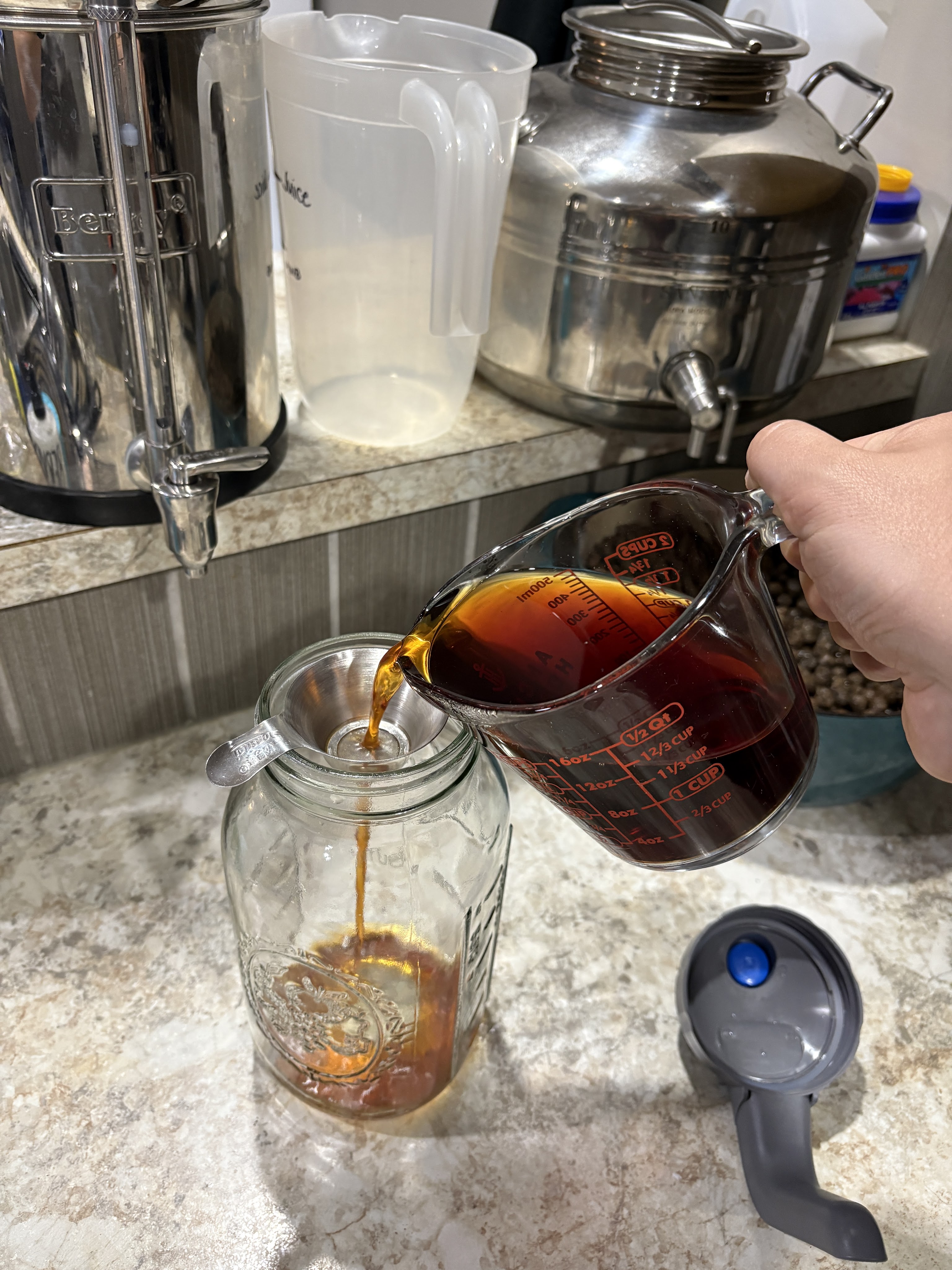
And you can do it with whatever tea gear you have. Such as this:
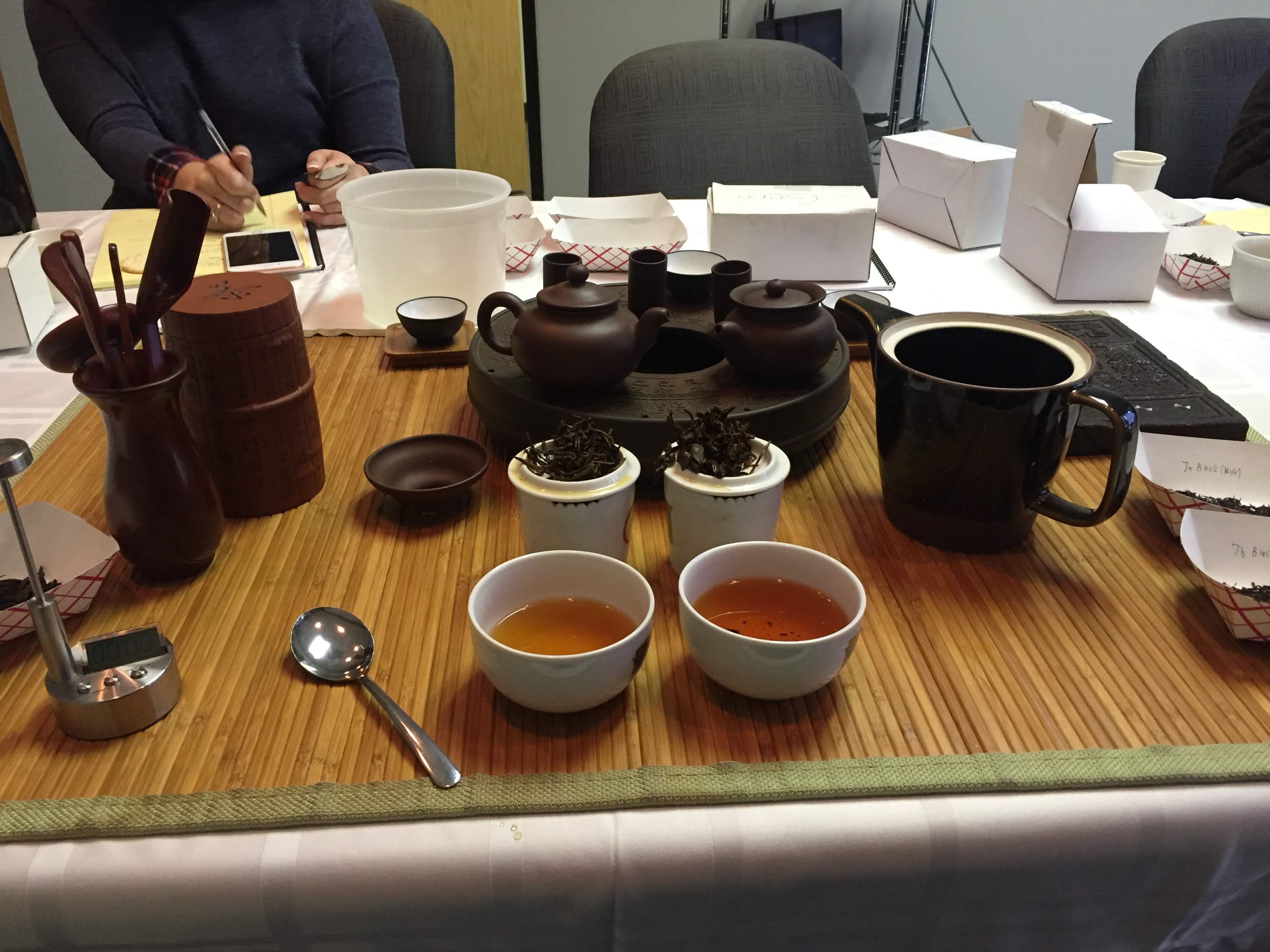
Or this:
Or even this:
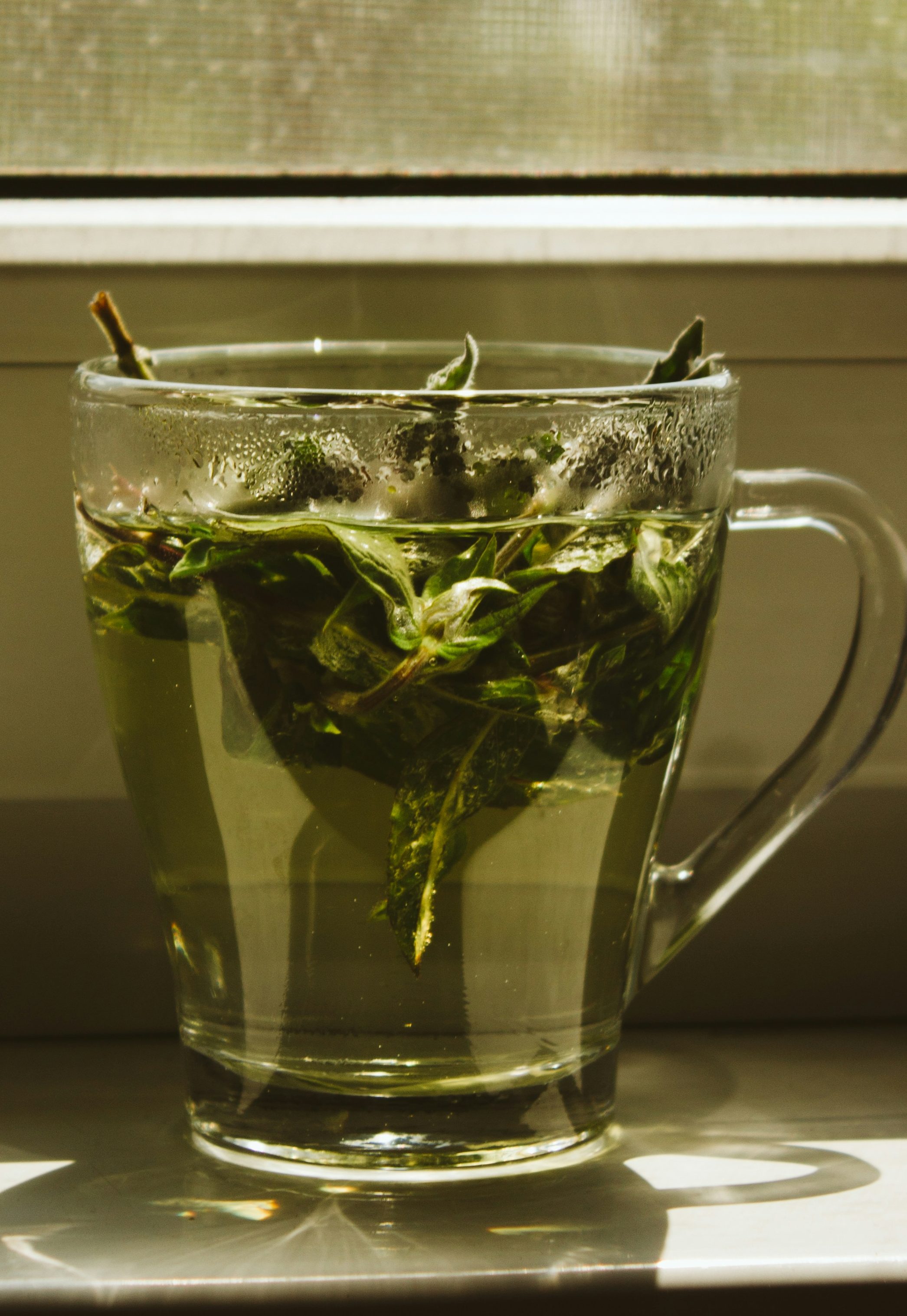
Whatever gear you have, just make sure you have as few distractions as possible. From here, try to do everything slowly. Pulling the tea bag out? slowly. Prepping kettle? slowly. Waiting on the steep? slowly. You get it. Slow down and pay attention to the small details of the process. You might even learn some things about yourself and your tea-making game.
Ritual with Friends
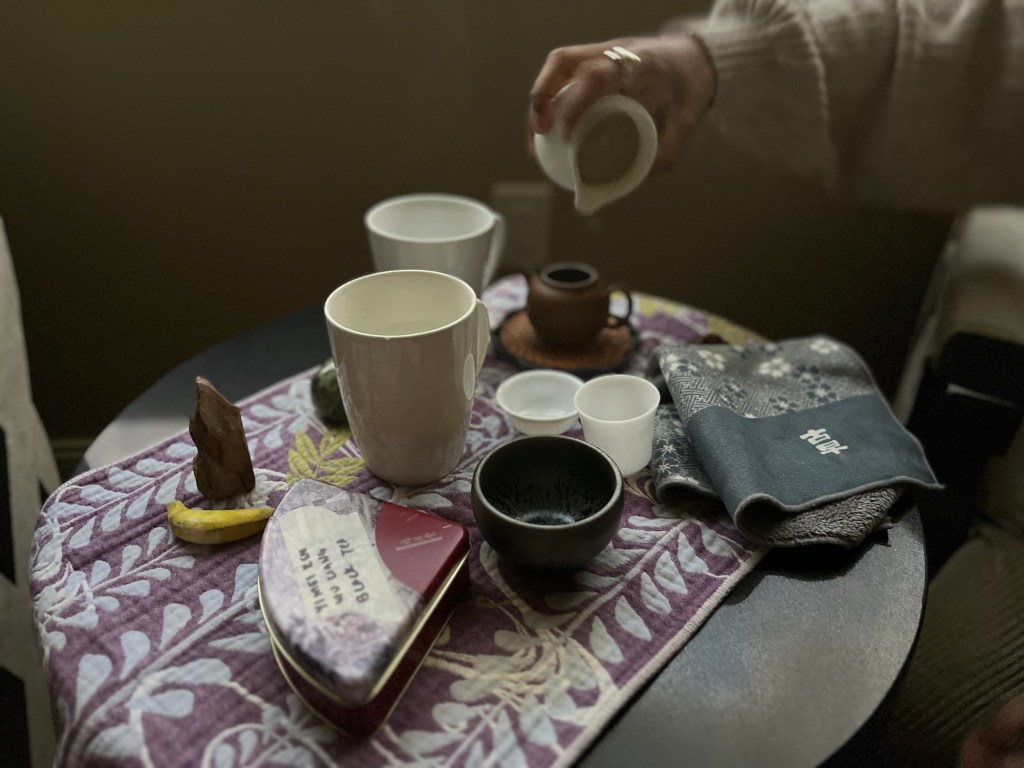
One last story. The picture being used as the main blog post photo is one of my friend Timothy Chacko and me enjoying tea early one morning before a long day of volunteering at World Tea Expo in Las Vegas.
We had just done a long day of travel the day before. We both had woken up early, and the sun was just starting to crest over the mountains, and the hotel room was pretty high up in the building.
Timothy surprised me by pulling out his whole setup, pictured above. I was expecting to go without tea that morning, due to a lack of equipment on my part. We boiled water on the stove, and he started brewing a JinJunMei black tea.
It was quiet in the room as our third roommate was still sleeping. We perched by the window to watch the sunrise and chat. It was such a peaceful moment because of the tea and quiet, but it was also a moment I got to know Timothy more as well. It was such a bittersweet trip, as it was the last major event I got to do with my time at The Cultured Cup, and I think that morning was a good example of how ritual both centred us for the day and brought a shared moment of community.
We went on that day to walk about 12,000 steps, make over 400 cups of tea, and do a lot of running between rooms. It was such a good time, and we were exhausted. But the day started in a good headspace and allowed me to process where I was at in life as I was moving from one season to another in my life.
Final Thoughts
So hopefully now you get why this exercise is important, or at least helpful regularly. Slowing down in life has many long-term benefits if you make it a habit. And what better medium than your tea, which you already enjoy?
I have given many ways to do this with whatever equipment you have. And it can be done on your own or with others. Giving you a range of ways to connect, relax, and reset. Enjoy things more slowly.
Now, while you go figure that out, I am going to finish steeping my cup of dirt*.
Happy Steeping!




 Sean the Tea Guy
Leave a comment